


Guzel Yakhina
Guzel Yakhina (Kazan, Russia, 1977) is a writer of Tatar origin, as well as a screenwriter and one of the most important contemporary authors in Russian language. A native speaker of Tatar, she learned Russian at school. She studied at the Department of Foreign Languages at Kazan State University and later completed screenwriting studies in Moscow. Before devoting herself to literature, she worked in marketing and advertising.
Her literary breakthrough came with her novel Zuleikha Opens Her Eyes (2015), the story of a Tatar peasant woman deported to Siberia during Stalin’s collectivization. The novel was adapted into an eight-episode television miniseries, won the prestigious Big Book and Yasnaya Polyana literary prizes, and has been translated into more than thirty languages.
This was followed by the novels A Volga Tale (2018), about the lives of German settlers along the Volga, and Train to Samarkand (2021), a historical story about the train that, in 1923, transported hundreds of children from the famine-stricken Volga region to Samarkand. Her latest novel is Eisen (2025).
In her novels, Yakhina explores history and personal memory, displacement, identity, family, survival, and the human capacity to create a new life after profound loss. Her prose combines historical research with a strong visual and cinematic storytelling style, placing the individual at the heart of great historical upheavals. Her works have been translated into more than forty languages.

Zuleikha Opens Her Eyes (Зулейха открывает глаза)
Translation to Macedonian: Igor Stanojоski
“Antolog”, Skopje: 2019
The story begins in a small Tatar village in 1930, in a world where women are subjected to constant humiliation. At its center is Zuleikha, a green-eyed young woman who witnesses the murder of her husband and is exiled to Siberia.
After an arduous journey on a freight train, she finds herself on the banks of the Angara River, in the harsh Russian taiga, among peasants, intellectuals, criminals, Muslims, Orthodox Christians and atheists, Tatars, Russians and Germans. Among them is Ignatov—the man who killed her husband.
Far from their homes and their pasts, they are forced to build new lives. And through motherhood, love and the struggle for survival, Zuleikha gradually discovers her own strength and freedom.
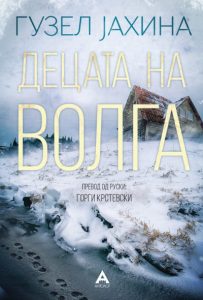
A Volga Tale (Дети мои)
Translation to Macedonian: Gjorgji Krstevski
“Antolog”, Skopje: 2021
On the steppes along the Volga in 1916, Jakob Bach, a Russian German and schoolteacher in the small village of Gnadenthal, lives a secluded life with his daughter Anje. In his solitude, he writes magical stories that, in a wondrous and tragic way, begin to come true.
His life changes when he falls in love with Klara, the daughter of a peasant from the other side of the Volga. But their love is swept into the turmoil of revolution, war, and the creation of the Volga German Republic.
А Volga Tale is a sweeping novel about love, death, history, war and creation, in which magical realism merges with the harsh reality of Russia and the fate of a vanished era.
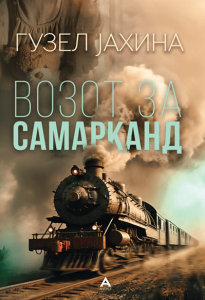
A Train to Samarkand (Эшелон на Самарканд)
Translation to Macedoninan: Sasho Hristovski
"Antolog", Skopje, 2023
In 1923, following the Civil War and a devastating famine, the Bolshevik government organizes the evacuation of thousands of abandoned children to regions where food is more readily available and survival is possible.
The experienced commander Deev and the stern commissar Bela are tasked with transporting five hundred homeless children from Kazan to Samarkand. The six-week journey across the vast expanses of Russia and Central Asia becomes a struggle against hunger, thirst, disease, violence and death.
For the children, the journey becomes both a dangerous adventure and a brutal school of survival. The thousands of kilometers they travel will change the lives of every passenger.
A moving yet luminous novel about childhood, survival, humanity and hope, in which Guzel Yakhina once again explores the traumatic pages of Russian history and shows how, even in the darkest of times, life finds a way to go on.